Psychophysics Of Fashion Demand Planning
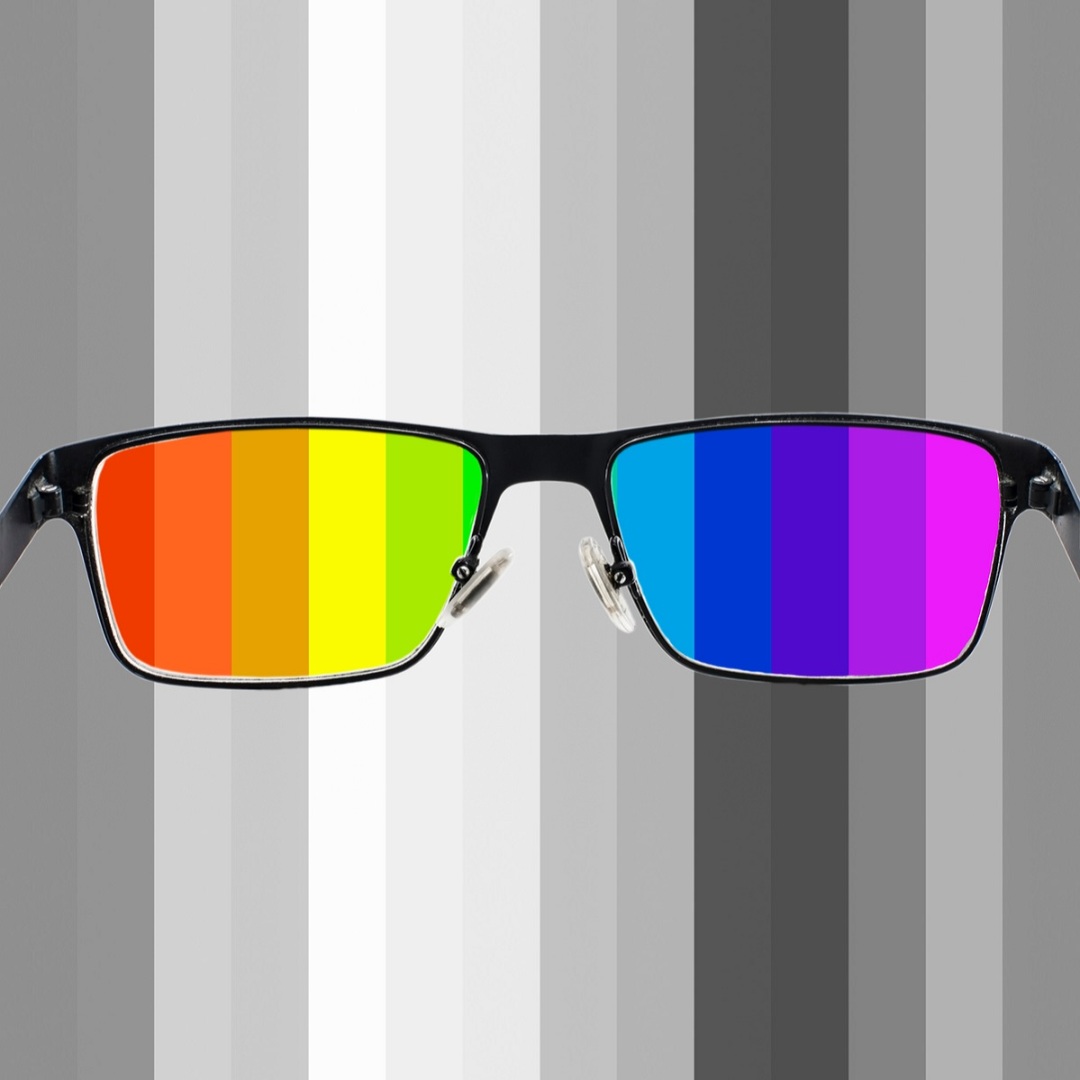
We, humans, are predictably irrational, as Dr. Dan Ariely says.
In this edit, we look at how psychophysics impacts fashion demand planning. Psychophysics is the scientific study of the relation between stimulus and sensation.
Imagine your wife or girlfriend says she is going for a haircut (appearance before cut),

when you see her late in the evening like this (appearance after the cut – a couple of inches)…

You may not notice the difference. You will definitely notice the difference when the cut is significantly different (like in the image below). Isn’t it?

There is a threshold in which we observe any difference in perception. This is called “The Just Noticeable Difference (JND)”. This is explained by Weber Fechner Law.
Weber-Fechner Law simply states that the perception is proportional to the ratio of the change to the original state. This can be in any dimension of a product. For example in fashion retail, this can be the perception of selection variety, price, relevance, etc..
The same happens in price perception. In the case below, while the difference is the same $ 1, we perceive the difference more in flakes than in the shirt. Isn’t it?

“Our perception is always relative”
Weber-Fechner Law In Fashion Demand Planning
Retail and Fashion demand planning hinge on key variables
a) Selection Quality (Relevance)
b) Selection Width
c) Product Value (Pricing + Quality)
d) Availability
The consumers look at your range/selection in a relative context. This is a fundamental principle to understand. Most demand planning solutions try to plan using your internal data. This is not completely relative from a consumer perspective. Yes, it is relative to what you made or offered.
The objective of good fashion demand planning is to minimize the supply-demand gap. This starts with an understanding of demand. The holistic understanding of demand comes with a combination of inside-out and outside-in demand.
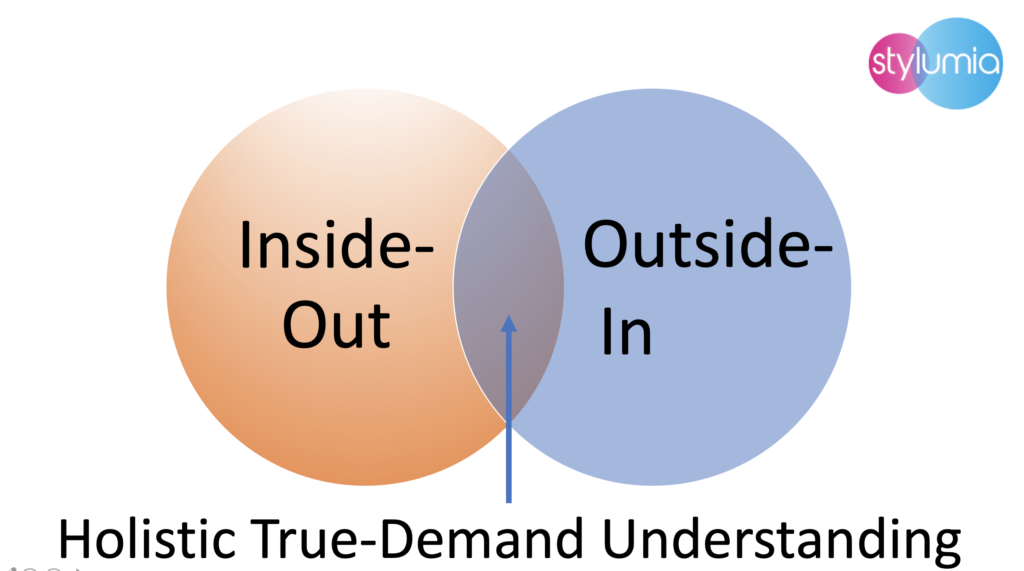
Inside-Out Demand Understanding
Demand is not sales. The sale is a signal of demand. This is a key understanding required to get the maximum out of your own data. This calls for the discovery of True Demand.
Understanding your True Demand is very contextual to an assortment. For example, the demand for a red dress in an assortment where only one dress exists is very different from an assortment with 5 red dresses. This is the context of sensing demand. This is a constrained demand estimation. Hence, the past sales data provides just input to estimating true demand.
In other words, the fashion demand planning engine must consider the nuances of assortment while arriving at the demand across the distribution and product hierarchy.
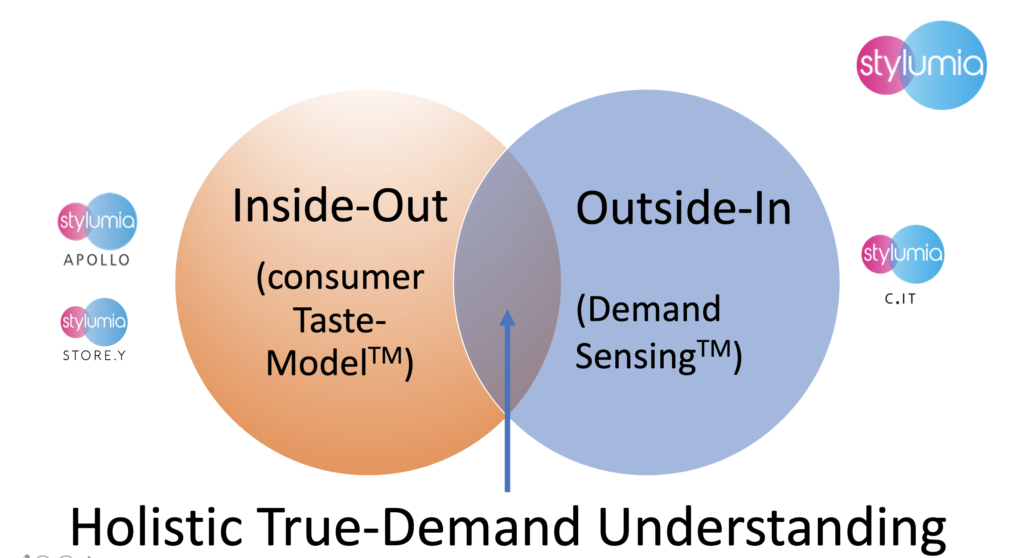
We at Stylumia built a unique consumer Taste Model to estimate True Demand using a proprietary Taste Model. This engine takes into account the context and degree of change as in the Weber-Fechner Law.
The result is a best-in-class lift in forecast accuracy which brings you the ability to double your brand’s profit margins.
Outside-In Demand Understanding
Consumers see your selection in the context of the world around your products. There is an important element to this observation from the consumer side. They see the demand side of the equation. Most of the data-driven fashion tools provide the supply side of the equation. It is important that you see the demand side of the consumers. Otherwise, you are propagating the error of fashion supply which has over 50% of noise (error-rate) reflected in the full price sell-through and overbuy metrics globally.
We at Stylumia realized this fundamental problem and hence built one of its kind Demand Sensing algorithm to decode the unknown demand. Our consumer intelligence tool provides you with this view of your demand planning. The solution covers insights from the lowest levels like size, color to the highest level of department/category and geo-specific.
Delivering Holistic Fashion Demand Planning
If you keep consumer taste at the center of all decision making, the chances of making ill-informed decisions are low. That is the mission for us to continually reduce the guesswork in fashion retail. The result is an always-on relevance, over-buy and under-buy reduction across the omnichannel distribution from pre-season to in-season.
The solutions and demand planning principles are mapped in the infographic below for your convenience.
In Conclusion,
The changing needs of consumers and your assortment relevance is always in a relative context. There is a compelling need now than ever before for any fashion brand or retailer to stay relevant in the perception of consumers with the right fashion demand planning solution.
Embracing the right tool and getting the “why” first and then “what” of the solution is super-critical. These are the times to be very careful in avoiding the endowment effect (we always value what we own more) and make an informed choice. The cost of the wrong choices is extremely significant.
If you liked this edit, you may be interested in some of our articles 1,2,3 on how fashion forecasting decisions are biased and their adverse business impacts.