Hyper-Accurate Fashion Forecasting | Inspired By GPS

Perseverance Mars mission is a true inspiration for us to look into space for solving earth’s challenges. One of the top 10 breakthrough innovations as per MIT’s Technology Review for 2021 is Hyper-Accurate Positioning. GPS technological advancement sets the inspiration for this edit on Hyper-Accurate Fashion Forecasting.
Global position system (GPS) when used properly helps prevent disasters. For example, using the latest GPS satellite BeiDou, we can spot dirt movements within millimeters of accuracy. The dirt movements are leading indicators of landslides. Many landslide-related deaths are prevented using precision positioning. This accuracy is from more than 21000 kilometers above the earth. As a result, such precision helps provide proactive landslide alarms to prevent disasters. We have a series of articles on reducing bias in fashion forecasting like 1, 2, 3 and, 4. This edit is special with a context which enlightens our understanding of the need for new thinking for Hyper-Accurate Fashion Forecasting.
Evolution Of GPS
The accuracy of GPS is improving over time. You can check here NASA’s contribution to GPS accuracy.
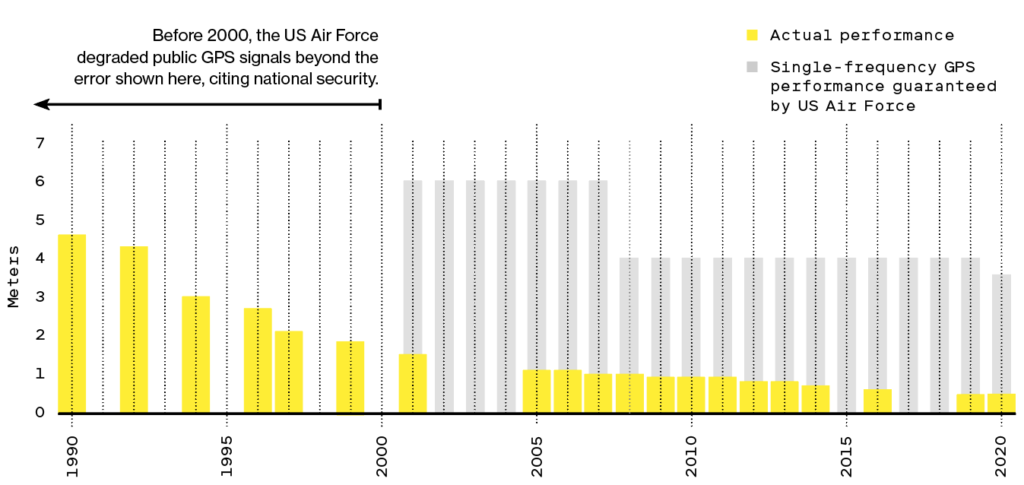
The infographic below will give you an idea of the scale of improvement in the accuracy of positioning over time.
How Did The Accuracy Improve?
GPS has changed the way billions of people move in the world. Over the last 28 years, over 24 GPS satellites are constantly broadcasting their positions.
GPS is normally accurate to within five to 10 meters. With the GPS III upgrade, the accuracy is improving to one to three meters as in the chart above. This improves the accuracy of the navigation systems consumers use today.
Inspite of these advances, the positioning signals get interference impacting their accuracy. We need another level of technology in order to correct these errors.
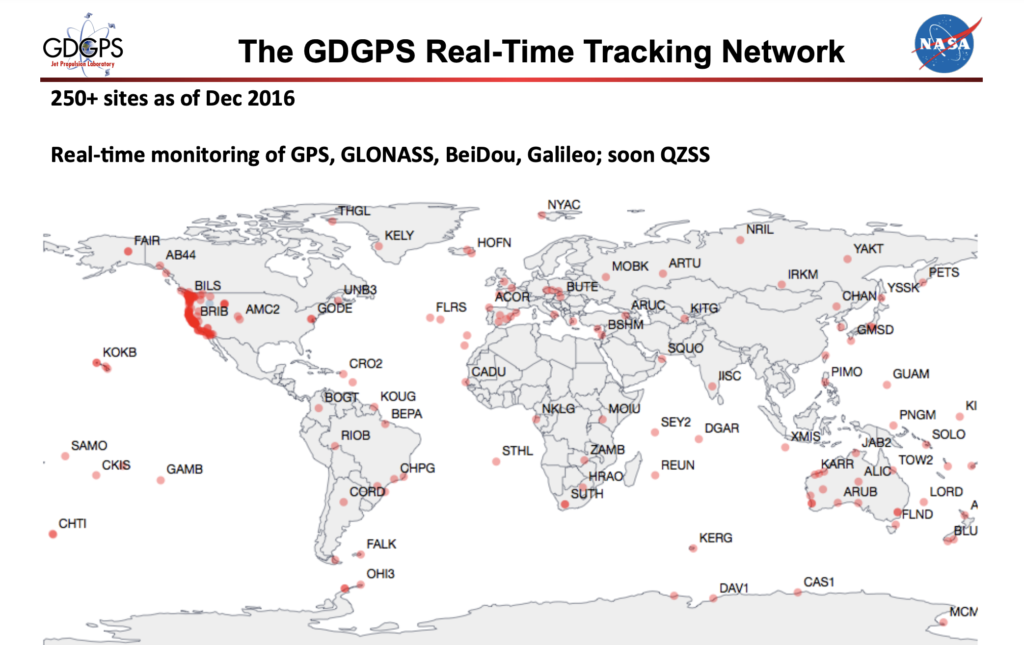
This new layer of technology is a ground-based augmentation to boost positioning accuracy to the centimeter level. Real-time kinematic (RTK) positioning, which uses a base receiver and a rover receiver, placed kilometers apart, to receive satellite signals and calculate the errors caused by interfering earth’s atmosphere. With this technology, we are able to get accuracies of less than three centimeters.
The other areas of deployment of accurate positioning include self-driving cars, delivery robots, precision agriculture.
The frontiers of positioning are going beyond GPS. One approach is using quantum properties of matter to locate and navigate without outside references. This approach will reduce the dependence on satellites and also remove the constraints. The research and improvement continue.
How can we use this method for hyper-accurate fashion forecasting?
Path To Hyper-Accurate Fashion Forecasting
We can improve the accuracy of fashion forecasting (hyper-accurate fashion forecasting), with a Fashion GPS and the ground level augmentation system.
Fashion GPS would mean accurate spotting of dynamic consumer demand. Tracking consumer demand across the world is a huge task.
This is a non-trivial problem statement. We embarked on the mission to solve in 2016. The tools and techniques of today’s spot supply. Hence, the need for new thinking, we call it Demand Science®. Demand science puts consumers at the center of everything. In a dynamic world with high demand uncertainties, there is no other way than to keep consumers at the center of every decision-making.
We at Stylumia are inspired by advances in technologies across sectors to bring the best to fashion brands and retailers across the world in solving the fundamental challenges of improving fashion forecasting and demand planning accuracies.

The GPS system is our C.IT solution (Consumer(period) Intelligence Tool) which is powered by one of its kind Demand Science engines. Our APOLLO prediction system augments at the ground level. APOLLO uses your contextual omnichannel data.
C.IT and APOLLO in combination provide a perpetual network of intelligence. You can now navigate the fashion world with peace and performance and prevent fashion disasters.
C.IT and APOLLO use advanced machine learning and computer vision to go beyond the limitations of textual data to understand fashion.
Our clients have seen accuracy lifts resulting in a reduction in overbuys, underbuys, and merchandise relevance every sprint. The quantum of impact range from 20-60% from their current baselines across key P&L variables.
If you are interested in knowing more about these solutions, stay ahead and stay relevant, please schedule a free demo session here.