The Hidden Billion-Dollar Leak: Retail Cost Reduction by Eliminating Demand Blind Spots
Why the real cost in retail isn’t operations — it’s making and moving products no one wants.
Introduction: The Unspoken Cost Crisis in Retail
In today’s volatile retail landscape, many leaders obsess over optimizing operations, reducing logistics costs, and streamlining marketing spend. But what if the biggest cost drain lies elsewhere? What if the true profit leak starts much earlier — at the point of product creation?
The reality is stark: the cost of unsold goods — and the entire machinery that goes into producing, distributing, and discounting them — is by far the largest and most invisible cost center in retail. From ideation and design to procurement, warehousing, and markdowns, retailers routinely burn billions chasing demand that was never there in the first place.
This blog uncovers the massive opportunity for retail cost reduction by addressing these hidden inefficiencies — starting with how demand is understood.
The Demand Blind Spot: Where Traditional Planning Goes Wrong
Retailers have long relied on historical sales data, merchant intuition, trend reports, or supplier push to make critical assortment decisions. While these may have worked in relatively stable times, they are painfully inadequate today for two big reasons:
1. Consumer demand is no longer linear or predictable. It shifts rapidly due to culture, climate, social trends, and digital influence — often before sales data can catch up.
2. By the time a product hits the shelf, the cost is already sunk. Creating and curating inventory based on guesswork locks capital early and sets off a costly domino of carrying costs, markdowns, and waste.
This creates a massive demand blind spot. Retailers are essentially flying blind — committing millions in product decisions without knowing if the market truly wants them. This directly limits any efforts at effective retail cost reduction.
The Real Cost of Getting it Wrong
Let’s break down where the losses really stack up — and where the biggest opportunity for cost savings lies:
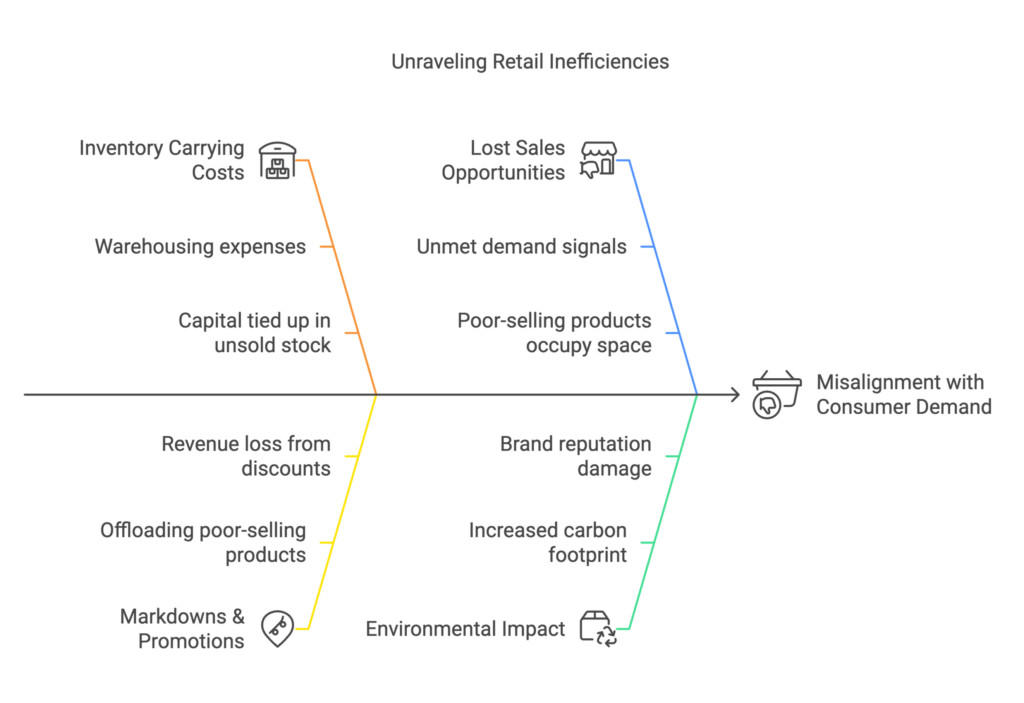
• Inventory Carrying Costs: Warehousing slow-moving stock can eat up to 25–30% of the inventory’s value annually.
• Markdowns & Promotions: The global retail industry loses an estimated $300B+ a year due to discounting — much of it to offload poor-selling products.
• Lost Sales Opportunities: While poor sellers hog shelf space, true demand signals often go unnoticed or unmet.
• Environmental Impact: Unused products add to the carbon footprint, harming both brand and planet.
All these costs stem from one root issue: the inability to align creation and curation with real consumer demand — the very problem that AI in retail planning is built to solve. This article by BCG indicates benefits for retails in improving demand forecast.
Lighting Up the Blind Spots: A Demand-First Approach
What if retailers could shine a light on these blind spots before investing in production? What if the product development funnel started with what consumers actually want, not what teams think might work?
That’s where demand-first intelligence changes the game.
This approach flips the retail planning model:
• Start with real-time consumer demand signals
• Validate them with market velocity and scarcity indicators
• Curate and create only what is likely to sell — not what you hope will
This creates a more agile, responsive approach that results in far greater inventory optimization, lower markdowns, and significant retail cost reduction.
Stylumia: Making Demand Visible and Actionable
At Stylumia, we believe demand is not something to guess — it’s something to sense.
Our platform uses real-time data across the internet to extract non-traditional insights. These include:
• How fast a product is selling
• How much demand exists relative to availability
• Emerging preferences — before they peak
Here’s how Stylumia lights up the demand blind spots:
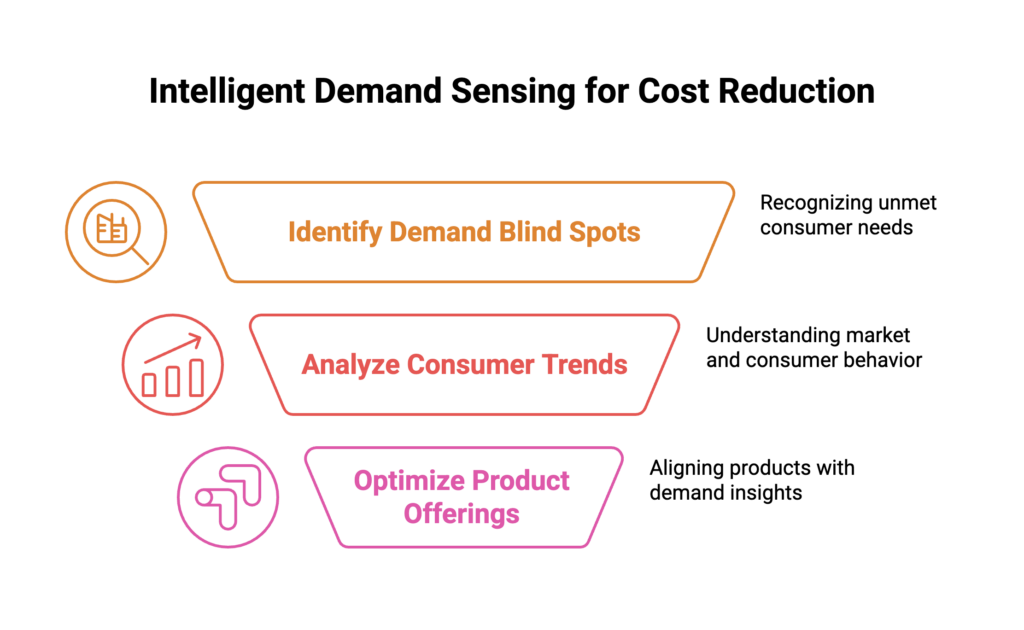
• Demand Score: A proprietary score that quantifies true market pull — not just views or clicks
• Custom Market Maps: Tailored intelligence unique to every client’s category, geography, and customer segment
• Demand-Driven Creation: From trend spotting to new product validation, we help brands reduce risk at the source — before investment, not after
Retailers using Stylumia have achieved:
• 30–40% reduction in style churn
• 2x higher full-price sell-through
• Reduced unsold inventory cost and improved working capital rotation
We don’t just forecast trends — we help ensure you don’t create what won’t sell. That’s where the true retail cost reduction lies.
Conclusion: It’s Time to Make Demand Visible
In a world where speed, sustainability, and precision matter more than ever, the old ways of planning are not just outdated — they’re expensive. The biggest ROI in retail today comes from reducing costs at the source — by eliminating the creation of products that won’t sell.
Stylumia is here to help you light up your demand blind spots — and unlock the most overlooked opportunity in retail: cost reduction through intelligent demand sensing.
Please recah out for a free consultation here.