Backward-Looking Assortment Planning Is Killing Your Product Success Rate
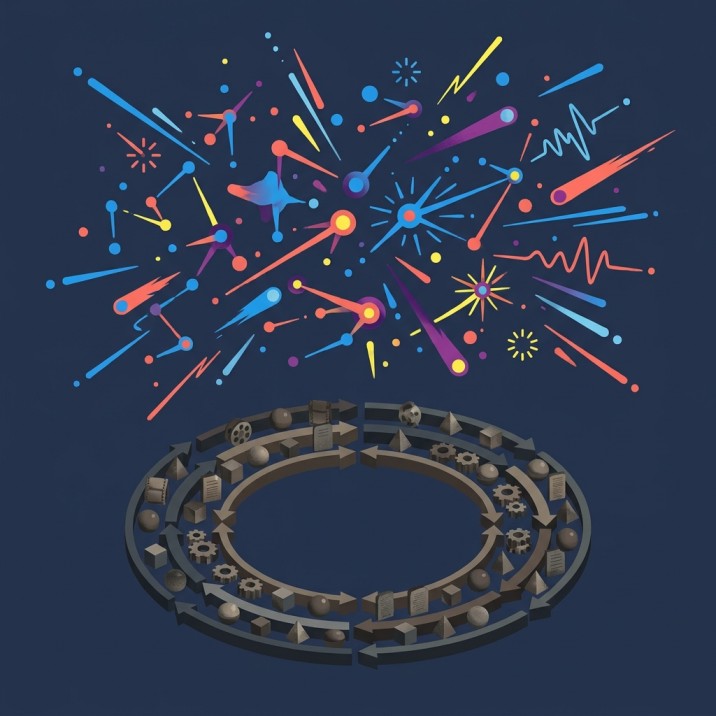
Your executive team just approved a product lineup worth tens of millions in committed capital. The assortment was built on rigorous analysis. Sales data from the past three seasons. Competitive benchmarking across your category. Vendor catalogs showing what is available to source. ERP outputs confirming what moved and what sat. Every decision backed by data. This is backward-looking assortment planning at its most sophisticated. And it is setting you up for failure.
Six months later, 40 percent of that lineup is selling at markdown. Another 20 percent will never sell at all. The products your team was most confident about are the ones gathering dust. Meanwhile, a competitor half your size is capturing margin on a trend you never saw coming because by the time it showed up in your sales data, they had already locked in production and owned the price anchor in market.
This is not a failure of effort or intelligence. This is a structural failure. Your organization is driving forward while staring into the rearview mirror. The data infrastructure you trust most, the systems that run your planning cycles, the intelligence that informs your biggest bets, all of it is backward looking. It tells you what sold yesterday with precision. It cannot tell you what will sell tomorrow. And that gap is costing you more than markdowns. It is costing you competitive position.
The Systems Thinking Translation
In complex systems theory, there is a concept called feedback delay. It describes the time lag between when a system changes and when that change becomes visible in your measurement instruments. When feedback delay is too long, the system becomes unstable. You overcorrect. You chase ghosts. You optimize for conditions that no longer exist.
Retailers operate inside a massive feedback delay. Consumer preference shifts in real time. It shows up first in search behavior, in social engagement, in early adoption patterns across digital channels. Weeks or months later, it appears in your competitor’s assortment. More weeks pass. It finally registers in your sales data, assuming you carried anything close to the trend. By the time your quarterly business review analyzes the pattern, the commercial window is closing.
The system is feeding you information too late to act on it. You are making forward commitments based on backward signals. The loop cannot self-correct because the data you are optimizing against is already obsolete the moment you use it. These lagging retail indicators create a permanent disadvantage against competitors using forward-looking merchandising systems.
This is not a data quality problem. Your sales data is accurate. Your ERP is functioning. The issue is structural. Lagging indicators cannot guide leading decisions. A rearview mirror cannot show you the road ahead, no matter how high resolution the image.
The Business Translation
Every product decision in retail is a bet on future demand. You commit capital, production capacity, and inventory months before a customer sees the product. The bet pays off when demand materializes. It fails when the market has moved on. New product failure rates have hovered between 40 and 60 percent for decades because the betting system has not changed. You are still using historical sales data limitations to predict a future that does not resemble the past.
A leading sportswear brand analyzed three years of performance data before launching a technical apparel line. Every metric pointed to demand. Sell-through rates on similar items were strong. Competitor benchmarking showed category growth. Consumer surveys validated interest. The line launched. It failed. Not because the analysis was wrong. Because the analysis measured the wrong thing. It measured what customers bought when those were the only options available. It did not measure what customers wanted when better options appeared.
The failure was not in execution. It was in the question being asked. Historical data answers what sold. It cannot answer what would have sold if it had been available. It cannot tell you what customers are searching for but not finding. It cannot show you the white space between what you carry and what the market wants. That gap is where new product failure rates live.
The Cost Structure Nobody Calculates
The visible cost of product failure is markdown. You bought it, you cannot sell it, you discount it to move it. Finance tracks this. Merchants get measured on it. But markdown is the smallest cost in the failure stack.
Opportunity cost is larger. Every slot in your assortment occupied by a product that does not sell is a slot unavailable for a product that would. A major home goods retailer carried 200 SKUs in decorative lighting. Forty percent sold poorly. That is 80 SKUs generating minimal revenue while occupying inventory positions, purchase order capacity, and visual merchandising real estate. The cost is not just the markdown on those 80. It is the margin you never captured on the 80 products you could have carried instead.
Strategic cost is larger still. Persistent product failure erodes organizational confidence. Merchants stop trusting their own judgment. Planning cycles get longer as more stakeholders demand input. Risk aversion becomes the default. Innovation dies. A leading home improvement chain ran the numbers. The internal cost of their product approval process, meetings, revisions, cross-functional sign-offs, exceeded the cost of the products being approved. They had built a system optimized to prevent failure. What they actually built was a system that prevented speed. And in retail, speed is the competitive edge that matters most.
Why Historical Sales Data Cannot Solve a Forward-Looking Problem
Your sales data tells you what happened when customers encountered your assortment under specific conditions. It cannot tell you what would have happened under different conditions. This is not a minor limitation. It is a fundamental constraint that makes historical data structurally incapable of predicting future performance.
A global auto parts retailer saw strong sales in a specific category of performance accessories. They expanded the assortment. Sales declined. The data said expand. The market said stop. What the data could not show was that the original sales were driven by a narrow enthusiast segment that was already fully penetrated. Expanding the assortment did not grow the customer base. It fragmented the SKU productivity. The sales data was accurate. The inference was wrong.
This happens because sales data is a record of transactions, not a map of demand. It shows you what people bought from what you offered. It does not show you what they wanted but could not find. It does not show you what they bought from a competitor because your assortment did not have it. It does not show you what they would have bought if the trend had been available when their interest peaked instead of when your planning cycle finally caught up.
Predictive assortment strategy requires a different data foundation. Not better historical data. Different data entirely. Data that captures demand signals before they convert to transactions. Search behavior. Engagement patterns. Competitive assortment moves. Market-level trend adoption curves. This is not incremental improvement on historical analysis. It is a different approach to the problem.
The Structural Trap of Assortment Optimization
Most assortment optimization systems are built to maximize efficiency within the existing framework. They analyze historical performance, identify patterns, and recommend SKU rationalization. They are very good at making your current approach less wasteful. They cannot make your current approach right.
A major fashion retailer implemented an advanced assortment optimization platform. It reduced SKU count by 30 percent, improved inventory turns, and increased sell-through rates on the products that remained. Finance celebrated. Merchants celebrated. Then market share started declining. The system had optimized the assortment for efficiency. It had also removed the experimental capacity needed to test new trends. The retailer became very good at selling what they already knew how to sell. They lost the ability to discover what customers wanted next.
Optimization assumes the current system is fundamentally sound and just needs tuning. But if the system is structurally backward-looking, optimization makes you more efficient at being wrong. You fail faster. You fail cheaper. You still fail.
The question is not how to optimize historical data. The question is whether historical data is the right input at all. If you are trying to predict future demand, and your primary input is past transactions, you are solving the wrong equation no matter how sophisticated your math.
Why Demand Intelligence Systems Outperform Traditional Planning
Demand intelligence systems do not replace historical sales data. They replace the assumption that historical sales data is sufficient for forward-looking decisions. They add a layer of market sensing that captures preference shifts before they appear in transaction records.
The structural advantage is timing. A demand intelligence system sees a trend when it is still forming. Search volume increases. Social engagement rises. Early adopters start buying from niche players. Competitive assortments begin shifting. All of this happens weeks or months before the trend reaches mass market transaction volumes. That lead time is the difference between owning a trend at full margin and chasing it at markdown.
A leading sportswear brand integrated demand intelligence into their planning cycle. They identified an emerging trend in sustainable materials six months before it appeared in their sales data. They locked in production, launched the line, and captured the price anchor in market. Competitors saw the same trend in their own sales data three months later. By the time they responded, the brand had already established category leadership and the competitive set was fighting for secondary positioning at lower price points.
The financial impact was not just the margin on that product line. It was the strategic position. They owned the narrative. They set the pricing expectations. They captured the customer cohort that cared most about the trend. Competitors were left with a choice: match at a loss or cede the segment. The brand made that decision possible not by having better designers or faster supply chains. They made it possible by seeing demand before it became obvious.
The ROI case for demand intelligence is not theoretical. It is mechanical. If you can see a trend three months earlier than your competitor, you can lock in production three months earlier. You avoid the premium costs of rush orders. You capture margin before competitive pressure compresses it. You reduce markdown risk because you are riding the demand curve up instead of chasing it down. The system pays for itself in the first trend it catches that your old process would have missed.
This capability is now available as an integrated solution through a strategic partnership between Stylumia and Increff, called Zero Blind. Stylumia provides the outside-in demand intelligence layer, aggregating global consumer signals from social platforms, search intent, e-commerce velocity, and editorial momentum to identify which trends have genuine commercial momentum before they reach mainstream adoption. Increff provides the inside-out operational layer, applying brand-specific warehouse rules, supply constraints, lead times, and regional distribution logic to ensure the intelligence translates directly into executable buy plans. The output is what Zero Blind calls a Market-Augmented Buy Plan, a mathematically validated product commitment where every SKU has been cross-referenced against validated consumer demand before the purchase order is placed. This is not a theoretical integration. It is a production-ready operating model that eliminates the structural gap between demand signal and shelf commitment, applicable across fashion, home furnishings, home improvement, and consumer electronics. The partnership represents the most complete answer available today to the rearview mirror problem: outside-in intelligence from Stylumia combined with inside-out execution from Increff, converging at the single decision point that determines whether your assortment succeeds or requires markdown intervention.
The Organizational Resistance You Will Face
Introducing forward-looking data into a backward-looking organization creates friction. Merchants trust what they can see in sales reports. Finance trusts what reconciles to revenue. Executives trust what has worked before. Demand intelligence asks all of them to make bets based on signals that have not yet converted to transactions. That is a cultural shift, not just a technical one.
The resistance will sound reasonable. We need to see proof. We need to validate the signal. We need to make sure this is not just noise. What they are really saying is we need to wait until it shows up in our sales data. Which defeats the entire purpose. By the time a trend is visible in your transaction records, the window for competitive advantage is closing.
A major home goods retailer faced this exact dynamic. Their demand intelligence system flagged an emerging trend in minimalist storage solutions. The data was clear. Search volume was rising. Competitor assortments were shifting. Early adopter purchases were accelerating. The merchandising team wanted to wait for sales data confirmation. By the time that confirmation arrived, three competitors had already launched, the price anchor was set below where the retailer could compete profitably, and the trend was moving toward saturation. They were right to want validation. They were wrong about what kind of validation mattered.
The organizational fix is not better change management. It is better pilot design. Run demand intelligence in parallel with traditional planning for one category. Make the same decisions you would have made with historical data alone. Then compare outcomes. When the demand intelligence system calls a trend that your traditional process missed, and that trend converts to revenue, you have proof in the language the organization understands. Not theoretical proof. Financial proof.
The Competitive Dynamics of Information Asymmetry
When you and your competitor are both using historical sales data, you are both seeing the same signals at roughly the same time. Competition becomes a function of execution speed, supply chain efficiency, and brand strength. Those are important. But they are not structural advantages. Your competitor can hire better operators. They can optimize their supply chain. They can invest in brand.
When you are using demand intelligence and your competitor is using historical sales data, you are playing a different game. You see trends months before they do. You make commitments while they are still analyzing. You capture margin while they are still deciding. This is not an execution advantage. It is an information advantage. And information advantages compound.
A leading fast fashion retailer used demand intelligence to identify an emerging color palette in women’s casualwear. They locked in fabric production and launched the line. Competitors saw the trend in their sales data six weeks later. By the time competitor products hit the floor, the retailer had already sold through their first production run at full margin and was into replenishment. Competitors entered the market at lower price points to compete. The retailer had already extracted the high-margin phase of the demand curve. They let competitors fight over the tail.
The financial result was margin expansion in a category where margin typically compresses as trends mature. The strategic result was customer perception. The retailer was seen as the trend leader. Competitors were seen as followers. That perception affects customer behavior in future trend cycles. It creates a reinforcing loop. The retailer that sees trends first gets known for seeing trends first, which attracts the customers who care about trends, which generates more data on emerging trends, which strengthens the intelligence system. The gap widens.
Your competitor cannot close that gap by working harder. They can only close it by changing their data foundation. And most will not. Because most organizations optimize what they have instead of questioning whether what they have is sufficient. That is your structural opportunity.
Moving from Diagnosis to Design
The problem is clear. Backward-looking assortment planning cannot solve a forward-looking demand problem. The solution is not incremental improvement on historical analysis. It is a different data architecture. One that captures demand signals before they convert to transactions. One that gives you lead time instead of lag time. One that turns information asymmetry into competitive advantage.
The implementation question is not whether to adopt demand intelligence. It is how to integrate it without destabilizing the planning cycles that keep your business running. The answer is parallel operation. Run demand intelligence alongside your existing process. Use it to inform, not replace, merchant judgment. Test it in categories where failure cost is manageable and success value is visible. Build organizational confidence through results, not mandates.
The financial question is ROI. Demand intelligence systems are not free. But neither is product failure. A 40 percent markdown rate on a product portfolio is not a cost of doing business. It is a cost of using the wrong data to make the right decisions. The ROI case is simple. If demand intelligence reduces your failure rate by 10 percentage points, what is that worth in margin preservation and opportunity capture? For most retailers, the payback period is measured in months, not years.
The strategic question is competitive position. If your competitor adopts demand intelligence and you do not, how long before the information gap becomes a market share gap? If you adopt it and they do not, how do you exploit the advantage before they catch up? The window is now. Demand intelligence is not emerging technology. It is proven technology that most retailers have not yet adopted. That gap is your opportunity. It will not stay open forever.
CONCLUSION
New product failure rates have not improved in decades because the data foundation has not changed. Retailers are still making forward bets using backward data. Historical sales data tells you what sold. It cannot tell you what will sell. That gap is structural, not operational. You cannot close it by analyzing historical data better. You close it by adding forward-looking demand intelligence to your data architecture. The retailers who make that shift will see trends earlier, capture margin faster, and build competitive positions that compound over time. The ones who do not will keep optimizing their rearview mirrors while wondering why the road ahead keeps surprising them. Backward-looking assortment planning is not a best practice. It is a structural disadvantage disguised as rigor.
Orbix Assort and Orbix Trends were built to solve this exact problem. They replace backward-looking planning with forward-looking demand intelligence augments the value with this industry-leading partnership making the solution 360 degrees.. Assort shows you what the market wants before it converts to transactions. Trends shows you where demand is forming while you still have time to act. Together, they give you the lead time that turns information into competitive advantage. If your team wants to see what this looks like for your specific category, start with a conversation at https://www.stylumia.ai/get-a-demo/
KEY TAKEAWAYS
Historical sales data is accurate but structurally incapable of predicting future demand because it only records what customers bought from what you offered, not what they wanted but could not find.
New product failure rates remain at 40 to 60 percent because retailers are still using lagging indicators to make leading decisions, creating a permanent feedback delay that prevents course correction.
The largest cost of product failure is not markdown, it is the opportunity cost of assortment slots occupied by products that do not sell instead of products that would have.
Demand intelligence systems outperform traditional planning by capturing preference shifts before they appear in transaction data, giving you months of lead time to lock in production and own pricing.
Organizational resistance to forward-looking data is cultural, not technical, and the fastest way to overcome it is parallel operation that produces financial proof instead of theoretical arguments.
Information asymmetry compounds, retailers who see trends first build customer perception as trend leaders, which attracts trend-focused customers, which strengthens the intelligence loop and widens the competitive gap.
Assortment optimization systems make you efficient at executing the wrong strategy if your data foundation is backward-looking, you fail faster and cheaper but you still fail.
FREQUENTLY ASKED QUESTIONS
Why does backward-looking assortment planning fail even when historical data is accurate?
Because accurate historical data still only tells you what happened under past conditions. It cannot predict what customers will want when market conditions change. You are optimizing for a reality that no longer exists by the time your products hit the floor. Sales data is a record of transactions, not a map of future demand.
What is the difference between lagging retail indicators and forward-looking merchandising?
Lagging indicators like sales data and ERP outputs tell you what already happened. Forward-looking merchandising uses demand signals, search behavior, competitive assortment shifts, and engagement patterns to see what customers want before they buy. The difference is timing. Lagging data makes you reactive. Forward-looking data makes you proactive.
How do demand intelligence systems reduce new product failure rates?
They give you lead time. You see trends forming months before they appear in transaction data. That lets you lock in production early, capture margin before competitive pressure builds, and avoid the rush costs of late decisions. You are riding the demand curve up instead of chasing it down. The failure rate drops because you are making bets on validated signals instead of historical guesses.
Can assortment optimization tools fix the problem of using historical sales data?
No. Optimization tools make your current approach more efficient. If your current approach is structurally backward-looking, optimization just makes you fail faster and cheaper. You need different data, not better analysis of the wrong data. Optimization assumes the system is sound and needs tuning. But if the data foundation is lagging, the system is not sound.
What is the ROI of switching from historical data to demand intelligence?
Calculate your current markdown rate. If demand intelligence reduces that by 10 percentage points, what is the margin impact? Add the opportunity cost of assortment slots freed up for better products. Add the competitive advantage of owning trends at full margin while competitors chase at discount. For most retailers, payback happens in months. The ROI is not theoretical. It is mechanical.
How do you overcome organizational resistance to forward-looking data?
Run it in parallel. Do not replace your existing process. Add demand intelligence to one category. Make the same decisions you would have made with historical data. Then compare outcomes. When the demand intelligence system calls a trend your traditional process missed, and that trend converts to revenue, you have proof. Not theoretical proof. Financial proof. That is what moves organizations.
Why have new product failure rates stayed constant for decades despite better technology?
Because the technology improved the wrong thing. Retailers got better at analyzing historical data. They did not change the data foundation. Better analysis of lagging indicators is still lagging. The failure rate persists because the structural problem, using past transactions to predict future demand, never got solved. Technology made the process faster and cheaper. It did not make it forward-looking.