What Can Fashion Learn From Software Product Management?
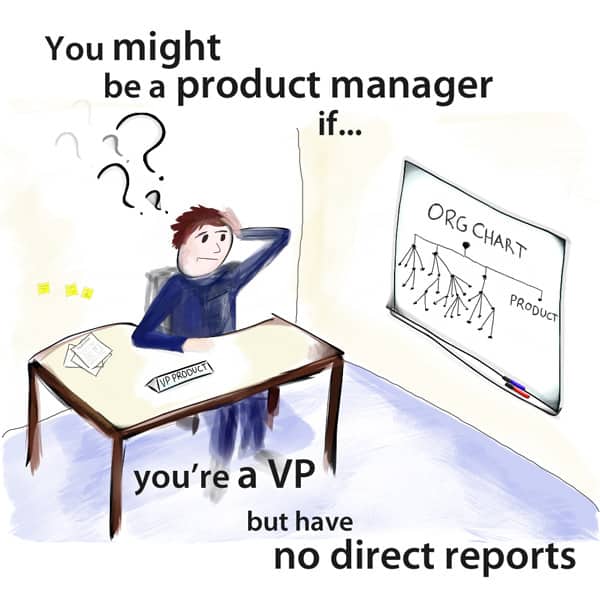
image credit: mindtheproduct
Great software products we use daily, change their “code” many times a day. For example, amazon improves its product every few seconds. Software products keep changing their form in the form of versions. There is nothing wrong with failing as long as there is continuous learning. After being in fashion and also software, it made me look at what can Fashion Learn From Software Product Management.
While the stimulus to response time in software is much shorter, the framework is very relevant. In particular, this is super relevant in the dynamic market consumer and market context that we have. We addressed the impact of speed of learning in our earlier article Einstein’s theory of relativity and fashion business here.
We will look at the fundamental roles of a product manager and see how it impacts the product and the business.
Role of a Product Manager
Software Product Managers navigate the uncertainty around Product Development. Working with an experimental team through the discovery and delivery phases, the Product Manager helps businesses achieve value through solving customer problems. Product managers regularly navigate uncertainty. It’s helpful to look at this framework. Product Managers check Facts to make sure they are true, identify Questions to answer through experimentation and analysis with Known Unknowns, know when to rely on Intuition to guide them through best practices and familiar territory, and explore the Unknown Unknowns to uncover the Innovation that lies in the epiphanies there.
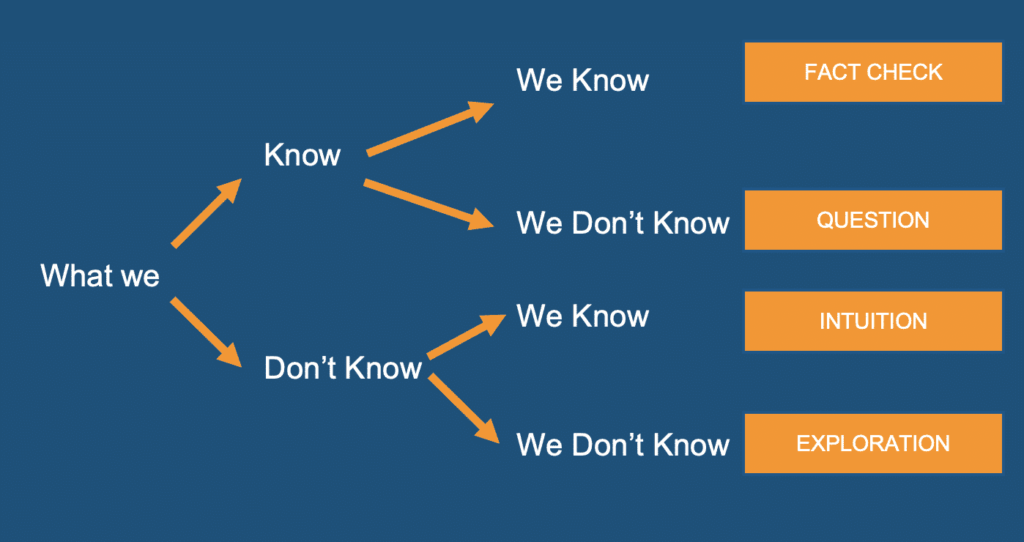
The two branches above around “we don’t know” are worth exploring. If I ask you a question “how many times you had a question and google search did not give you an answer which is satisfactory?”
This will be a very low proportion. What that means is, in general, the world has solved a problem that we think “we don’t know” already.
Hence, in order to solve problems, what is more, and more critical is to ask “questions” and “fact check”. “Intuition” definitely has its place.
A role is best understood by the metrics the role is supposed to deliver on. We will dwell on the metrics great product managers deliver on.
Product Manager’s Metrics
As you can below, the product manager is always focussed on the consumer (the user of the product). Solving consumer’s visible or latent need is always on top of the agenda.
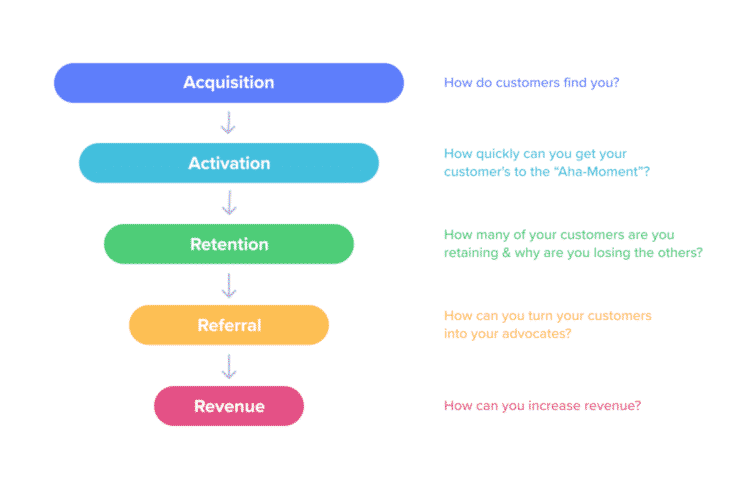
Another framework which Google uses for product management is the HEART framework.
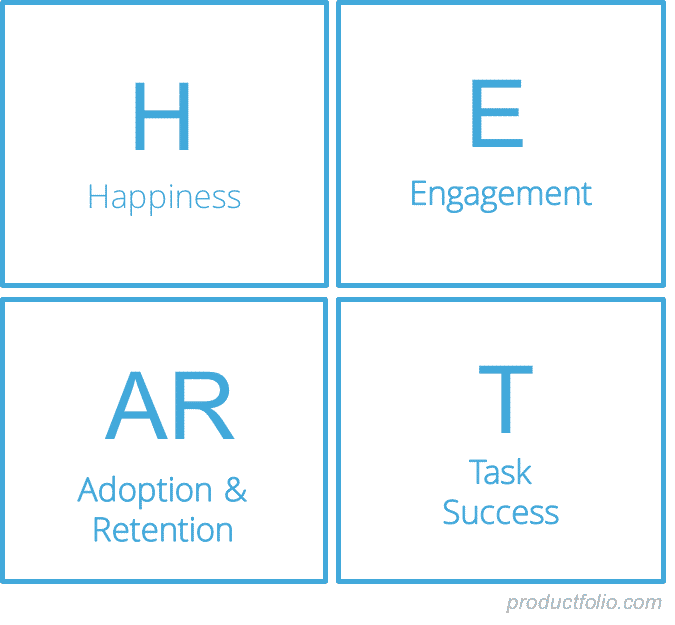
Those who are interested in knowing more about the HEART framework can check this article.
One thing that pops out from these metrics is “consumer centricity”.
Time for Fashion To Move From Project To Product Management
Most of software development today are still in project management which is output focussed. Great product managers are rare to find who is obsessed with an outcome focus.
The fundamental difference between project and product management is the output focus of project management vs outcome focus of product management. The outcome is what your consumers get as result out of the product. Many projects deliver output but may not be adding value to the consumers/users.
It is a fact that fashion industry in 2018, produced 150 billion garments, 50 billion of it did not sell a single piece and 50 billion sold at discount. This is a case of projects being delivered (output) with a significant scope of (outcome) which is consumption.
This is a serious problem at global scale impacting economically and environmentally.
There is a huge opportunity for the push-driven fashion supply chain (output) to a demand-driven (outcome) supply chain, in fact, create a movement of a demand chain. This resulted in Stylumia‘s Demand Science®. We have demonstrated that it works and saved over 60 million garments thus far and increasing by the day as we work with more and more brands and retailers.
We are super excited about the possibility of making difference to the world by working with fashion, lifestyle, sports, and home brands and retailers globally.
This article is a call for a re-invention of how the fashion & lifestyle industry works. We invite the brands and retailers for a re-look at the fundamental process through which we deliver propositions to consumers.
Let’s work together to conserve the economic and environmental resources by being a “learning machine”.
It’s Day 1.