facebook Created with Sketch. instagram Created with Sketch. linkedin Created with Sketch. twitter Created with Sketch.

Why a Digital Twin of Demand Beats Traditional Forecasting

| 14 min read

Most retailers treat trend forecasting like a precision instrument. They want one confident call about next season. They want a list of the winners. They want certainty before they commit millions to production. And then the trends miss, the products sit, and the markdowns eat the margin. Again.

The problem is not the quality of the forecast. The problem is the assumption that consumer trends are forecastable in the way a straight line is forecastable. They are not. Consumer demand behaves like weather. It follows rules but resists long range prediction. It is not random and it is not neatly linear. It is deterministic chaos. You cannot predict the exact next viral product, but you can build a working model of the system and read where it is heading before your competitors do. That shift, from forecasting demand to running a live digital twin of demand, is what separates the retailers who keep getting surprised from the ones who see movements forming early enough to act.
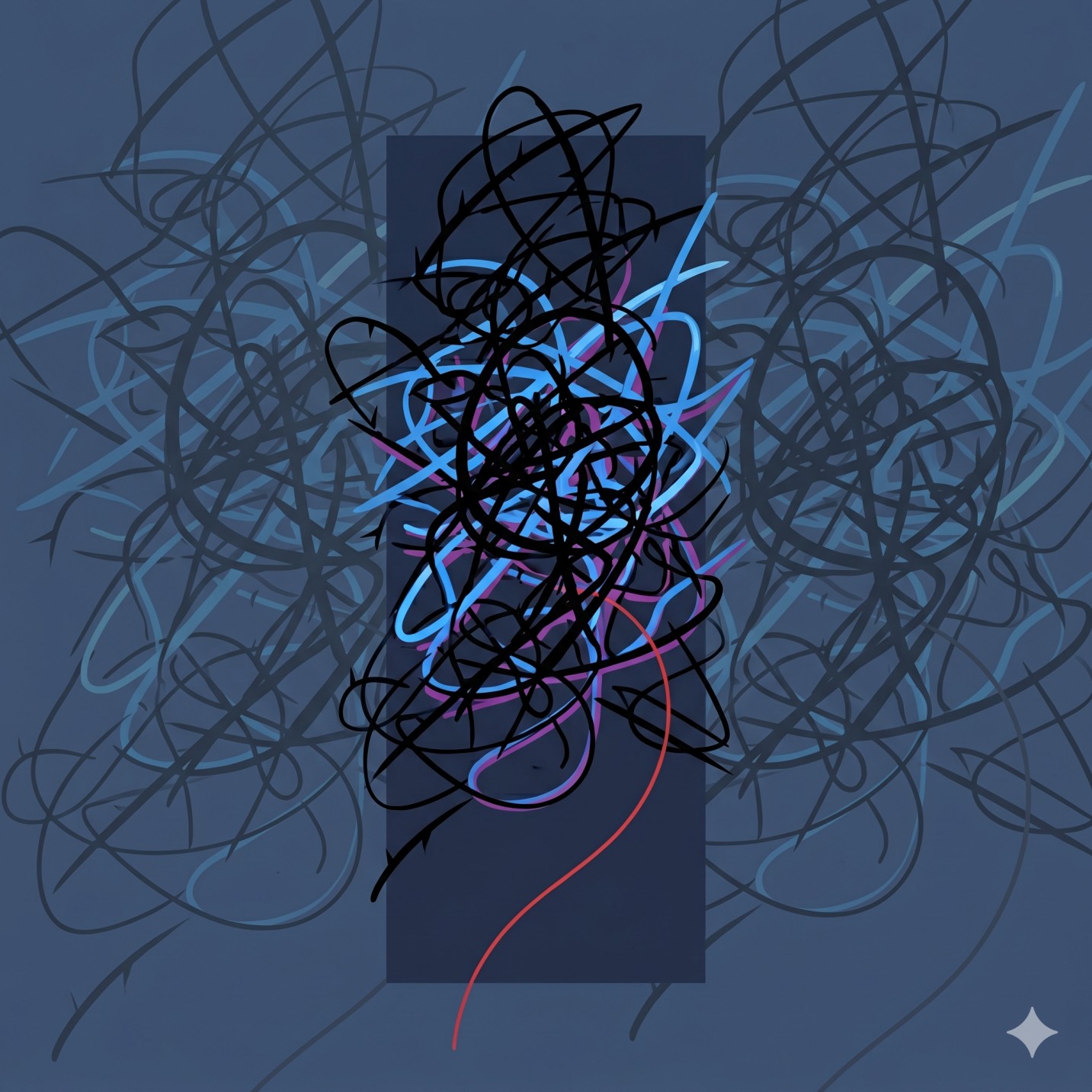
This is not metaphor. The science that explains why weather forecasts degrade after ten days is the same science that explains why your trend deck from six months ago already feels stale. Understanding that science, and how the most advanced players are now applying it, gives you a clearer path forward than any amount of hopeful guessing.

THE SCIENCE OF THE UNPREDICTABLE

In 1961, a meteorologist named Edward Lorenz was running a weather simulation on an early computer. He wanted to rerun part of a sequence, so he typed in the numbers from a printout and restarted the model. The new forecast diverged wildly from the original. He thought the machine had malfunctioned. It had not. The printout had rounded the variables to three decimal places. The computer was using six. That tiny difference, a fraction of a percent, produced a completely different weather pattern within weeks of simulated time.

Lorenz had discovered sensitive dependence on initial conditions. A butterfly flapping its wings in Brazil could, in theory, set off a tornado in Texas. Not because butterflies cause tornadoes, but because the atmosphere is so sensitive to starting conditions that tiny perturbations cascade into massive differences downstream. This became the founding insight of chaos theory.

James Gleick’s book Chaos tells the story of how this discovery grew into a new science. Lorenz’s butterfly effect was just the beginning. Three more principles anchor the field, and together they explain why certain systems obey fixed rules yet remain unpredictable in detail.

First, strange attractors. Chaotic systems never repeat exactly, but they stay inside a bounded, recognizable shape. If you plot the variables of a chaotic system over time, the pattern traces a shape that looks organic, almost alive. The Lorenz attractor looks like a butterfly. The system never crosses the same point twice, but it always stays within that butterfly shape. The system has structure. It just does not have repeatability.

Second, fractals. Chaotic systems show self similarity across scales. Zoom into a coastline and you see the same jagged complexity at every magnification. The same pattern repeats whether you are looking at miles or inches. This property means that chaos does not smooth out when you aggregate. Adding more data does not make the system more predictable. It reveals more layers of the same complexity.

Third, phase transitions. Chaotic systems can flip suddenly from one regime to another. A small change in one variable crosses a threshold and the entire system reorganizes. Water sits still, then boils. Traffic flows smoothly, then jams. A trend simmers quietly, then explodes. The transition is not gradual. It is abrupt. And it is often irreversible without a much larger change in the opposite direction.

These four principles, sensitivity to initial conditions, strange attractors, fractals, and phase transitions, define chaos theory retail behavior. Consumer trends are not random noise. They are deterministic chaos. They follow rules. They have structure. But they resist the kind of long range prediction that traditional consumer trend forecasting assumes is possible.

Consumer demand has every signature of a chaotic system. Start with sensitivity to initial conditions. A celebrity wears a specific sneaker style to a single event. That image gets shared. A few influencers pick it up. Suddenly the style is everywhere and your competitor who stocked it early is clearing full price while you are scrambling to catch up. The initial condition, one image, one moment, was tiny. The downstream effect was massive. You cannot predict which moment will cascade. But you can watch for the cascade as it starts.

Strange attractors show up in how trends circulate. A fashion trend never repeats exactly, but it stays within recognizable boundaries. Oversized silhouettes come back, but not in the exact same cuts or fabrics. The system orbits around certain aesthetic attractors without ever landing on the same combination twice. If you are waiting for an exact repeat of a past winner, you will miss the current version entirely.

Fractals appear in how trends propagate across channels and geographies. A color trend that works in activewear shows up in home decor. A silhouette that starts in streetwear appears in sportswear, then in workwear. The same underlying pattern repeats at different scales and in different categories. Aggregating sales data across categories does not smooth this out. It reveals more layers of the same complex structure.

Phase transitions are the sudden flips that destroy traditional forecasts. A product sits at low steady demand for weeks. Then it crosses a threshold. Demand explodes. Inventory evaporates. The shift is not gradual. It is a phase change. And once it happens, going back requires a much larger intervention than the small signal that triggered the jump. A leading sportswear brand watched a running shoe style move from steady baseline to sold out in under two weeks after a viral social media moment. The forecast model had projected gradual growth over six months. The phase transition made that forecast irrelevant.

This is why traditional forecasting fails. It assumes smooth curves, stable relationships, and predictable lead times. Chaos theory retail systems do not behave that way. They follow rules, but those rules produce outcomes that diverge rapidly from any single point prediction. The solution is not better forecasting. The solution is a different approach entirely.

HOW NVIDIA MODELS WEATHER WITH DIGITAL TWINS

NVIDIA does not try to forecast weather six months out with a single confident prediction. They build a digital twin of the atmosphere. They run the model continuously, ingesting live data from thousands of sensors, satellites, and ground stations. The model updates in real time. It does not produce one forecast. It produces a probability distribution of possible outcomes, updated constantly as new data arrives.

The breakthrough is not better prediction. The breakthrough is continuous modeling. The system does not try to guess the exact temperature in a specific city three months from now. It models the current state of the system, projects forward in multiple scenarios, and updates those projections as conditions change. When a new data point arrives, the model adjusts. The forecast is always fresh because the model is always running.

This approach works because it respects the limits of predictability in chaotic systems. Weather models are accurate for about ten days. After that, sensitivity to initial conditions degrades the forecast faster than new data can correct it. So NVIDIA does not pretend to see further. They model what is knowable now and update continuously. The result is not perfect foresight. The result is the earliest possible signal when conditions start to shift, which is exactly what you need to make better decisions than your competitors.

The same logic applies to consumer demand. You cannot predict the exact bestseller six months out. But you can build a live model of the demand system, ingest signals from every channel where consumers express preference, and update your understanding continuously. When a trend starts to move, you see it forming before it shows up in your sales data. That early signal is worth more than any static forecast.

BUILDING A DIGITAL TWIN OF DEMAND ACROSS CHANNELS

A digital twin of demand is not a forecast. It is a continuously updated model of the consumer preference system. It ingests signals from search, social, browse, cart, purchase, and return behavior across every channel where your category lives. It does not try to predict one outcome. It models the current state of demand and tracks how that state is evolving in real time.

The structure mirrors NVIDIA’s weather approach. Multiple data streams feed the model. The model updates continuously. The output is not a single forecast. The output is a live map of where demand is concentrating, where it is dispersing, and where phase transitions are forming. You see the strange attractors. You see the fractal patterns across channels. You see the sensitivity cascades as they start. And you see the phase transitions early enough to act.

This requires multi channel demand modeling. Consumer preference does not live in one channel. A shopper searches on Google, browses on Instagram, compares on Amazon, and buys in your store. Each touchpoint is a sensor. Each signal updates the model. If you only watch your own sales data, you are flying blind until the trend has already moved. If you watch the full system, you see the movement forming before your competitors do.

A major home goods retailer built this capability and used it to catch a color trend shift three weeks before it showed up in their sales. Search volume for a specific shade of green started climbing. Social posts featuring that color accelerated. Browse behavior and demand patterns on competitor sites confirmed the pattern. The retailer adjusted their assortment and marketing before the trend peaked. They captured full price sell through on products their competitors had to mark down because they reacted too late.

The difference was not better forecasting. The difference was continuous modeling. The retailer was not trying to predict demand six months out. They were reading the current state of the system and updating their understanding every day. When the system started to shift, they saw it immediately.

WHY TRADITIONAL FORECASTING FAILS IN CHAOTIC SYSTEMS

Traditional consumer trend forecasting assumes that past patterns predict future outcomes in a stable, linear way. You analyze last year’s data. You project forward. You adjust for known variables like seasonality or promotions. You produce a forecast. You commit to production. And then the market moves in a direction your model never considered because the model was built on the assumption that the system is predictable.

Chaos theory retail systems are not predictable that way. Sensitivity to initial conditions means that small unmodeled variables, a viral post, a supply chain hiccup at a competitor, a celebrity endorsement, can cascade into massive demand shifts. Strange attractors mean that trends never repeat exactly, so historical patterns are guides, not blueprints. Fractals mean that aggregating data does not reduce complexity. Phase transitions mean that demand can flip suddenly from one regime to another without warning.

A leading lifestyle retailer learned this when their spring forecast missed on silhouette trends. The model projected continued demand for fitted styles based on the previous two seasons. The market flipped to oversized. The transition happened in under three weeks. The retailer was stuck with millions in inventory that no longer matched demand. The forecast was not wrong because the data was bad. The forecast was wrong because it assumed the system would stay in the same regime. It did not.

The failure mode is structural. Traditional forecasting treats demand as a predictable function of known variables. Deterministic chaos forecasting recognizes that demand follows rules but resists long range prediction. The solution is not more data fed into the same model. The solution is a different model entirely, one that respects the limits of predictability and focuses on continuous observation instead of static projection.

WHAT A LIVE DEMAND INTELLIGENCE SYSTEM CAPTURES THAT FORECASTS MISS

A live demand intelligence system built as a digital twin captures the signals that traditional forecasts ignore. It tracks preference before purchase. It watches how trends propagate across channels. It detects phase transitions as they form. And it updates continuously, so the model is never stale.

Preference signals come first. Search volume, social mentions, browse behavior, demand intelligence at market scale. These are leading indicators. They show where attention is concentrating before it converts to sales. A forecast based on sales data is always lagging. A model based on preference signals is always leading. The difference is weeks of reaction time, which is the difference between capturing a trend at full price and chasing it with markdowns.

Cross channel propagation comes next. A trend that starts in one channel spreads to others in predictable patterns. Streetwear trends move from Instagram to TikTok to retail. Home decor trends move from Pinterest to search to purchase. A digital twin tracks these patterns in real time. When a signal appears in an upstream channel, the model projects where it will show up next. You stock the product before the demand peak, not after.

Phase transition detection is the critical capability. A live model watches for the signals that precede a sudden shift. Accelerating search volume. Rising social velocity. Increasing browse to cart conversion. These are the early warnings that a trend is about to flip from simmering to boiling. A static forecast misses these signals entirely because they happen between forecast cycles. A continuous model catches them immediately.

A leading home improvement chain used this approach to catch a surge in demand for a specific outdoor lighting style. Social posts featuring the style started accelerating. Search volume doubled in two weeks. Browse behavior on their site confirmed interest. The chain increased inventory allocation before the trend peaked. They sold through at full price while competitors scrambled to restock and had to discount to clear late arriving inventory.

The system did not predict the trend six months in advance. It detected the trend as it was forming and gave the retailer enough lead time to act. That is the difference between forecasting and modeling. Forecasting tries to see the future. Modeling reads the present faster than your competitors do.

PREDICTIVE RETAIL ANALYTICS VERSUS CONTINUOUS DEMAND MODELING

Predictive retail analytics sounds like the solution. Use machine learning to find patterns in historical data and project them forward. The promise is better forecasts. The reality is that you are still trying to predict a chaotic system with a tool built for linear systems. The model will find patterns. Some of those patterns will hold. Many will not. And you will not know which is which until after you have committed to production.

Continuous demand modeling is a different approach. It does not try to predict outcomes months in advance. It models the current state of the system and updates that model as new data arrives. The output is not a single forecast. The output is a live map of where demand is now, where it is moving, and how fast it is moving. You make decisions based on the current state of the system, not a projection made months ago when the system was in a different state.

The distinction matters because it changes what you optimize for. Predictive retail analytics optimizes for forecast accuracy. Continuous demand modeling optimizes for reaction speed. In a chaotic system, reaction speed beats forecast accuracy every time. You cannot predict the exact next viral product. But you can see it going viral early enough to stock it before your competitors do.

The lesson is not that predictive analytics is useless. The lesson is that it is the wrong tool for the chaotic parts of your assortment. For stable, predictable SKUs, traditional forecasting works fine. For trend driven, fast moving categories, you need a different approach. You need a digital twin of demand that updates continuously and gives you the earliest possible signal when the system starts to shift.

THE STRUCTURAL SHIFT FROM FORECASTING TO MODELING

The shift from forecasting to modeling is not a technology upgrade. It is a structural change in how you think about demand. Forecasting assumes you can see the future if you have enough data and a good enough model. Modeling assumes the future is unknowable in detail but readable in real time if you watch the right signals.

This changes what you build. Instead of investing in better forecasting algorithms, you invest in better signal capture. Instead of trying to predict demand six months out, you build the infrastructure to read demand as it forms. Instead of committing to production based on a static forecast, you commit in stages based on a continuously updated model.

The operational implications are significant. You need faster production cycles so you can act on fresh signals. You need flexible supply chains so you can shift allocation as demand moves. You need decision systems that update continuously instead of quarterly. And you need a demand intelligence system that ingests signals from every channel and updates your understanding in real time. Even if you have longer lead times, you can recat at various parts of teh supply chain at different times.

A leading sportswear brand rebuilt their planning process around this logic. They reduced their advance commit from six months to eight weeks for trend driven styles. They built a demand twin that ingested signals from search, social, and browse behavior across all major retail channels. They updated their production plan weekly based on the latest model output. The result was a 40 percent reduction in markdowns and a 25 percent increase in full price sell through. They did not get better at predicting trends. They got faster at reading them.

The shift is hard because it requires letting go of the illusion of control that forecasting provides. A forecast gives you a number. A model gives you a probability distribution and a live signal. The forecast feels more certain. The model is more accurate. But accuracy in a chaotic system does not mean predicting the exact outcome. It means seeing the movement early enough to act.

CONCLUSION

Consumer demand is not random and it is not linear. It is deterministic chaos. It follows rules but resists long range prediction. The science that explains why weather forecasts degrade after ten days is the same science that explains why your trend forecast from six months ago is already obsolete. Sensitivity to initial conditions, strange attractors, fractals, and phase transitions define how trends move. Traditional forecasting ignores this. A digital twin of demand respects it.

The retailers who win are not the ones with the best forecasts. They are the ones with the best models. They watch the system continuously. They see movements forming before those movements show up in sales data. They act early enough to capture trends at full price instead of chasing them with markdowns. They do not try to predict chaos. They model it, read it, and move faster than their competitors.

The shift from forecasting to modeling is the shift from guessing the future to reading the present faster than anyone else. That is the advantage. That is the edge. And that is what separates the retailers who keep getting surprised from the ones who see it coming.

Orbix Trends is the demand intelligence system that makes this shift operational. It ingests preference signals from every channel where your category lives, models the current state of demand, and updates continuously so you see movements forming before they show up in your sales. If your team wants to see what this looks like for your specific category, start with a conversation at https://orbix.stylumia.ai/trends

KEY TAKEAWAYS

Consumer demand behaves like weather, following rules but resisting long range prediction due to sensitivity to initial conditions, strange attractors, fractals, and phase transitions.

Traditional forecasting fails because it assumes stable linear relationships in a system defined by deterministic chaos, where small unmodeled variables cascade into massive demand shifts.

A digital twin of demand models the current state of consumer preference continuously, ingesting signals from search, social, browse, and purchase behavior across all channels.

Preference signals like search volume and social mentions lead sales data by weeks, giving retailers who track them time to act before trends peak.

Phase transition detection, watching for accelerating signals that precede sudden demand flips, is the critical capability that separates early movers from late chasers.

Continuous demand modeling optimizes for reaction speed rather than forecast accuracy, which is the correct trade in chaotic systems where early signals beat distant predictions.

The operational shift requires faster production cycles, flexible supply chains, and decision systems that update weekly instead of quarterly based on live demand intelligence.

FREQUENTLY ASKED QUESTIONS

Q1: How does a digital twin of demand differ from traditional trend forecasting?

Traditional forecasting tries to predict specific outcomes months in advance based on historical patterns. A digital twin of demand models the current state of consumer preference continuously, updating in real time as new signals arrive. It does not guess the future. It reads the present faster than your competitors do, giving you weeks of lead time to act before trends show up in sales data.

Q2: Why does chaos theory retail explain why forecasts miss so often?

Chaos theory shows that consumer demand is sensitive to initial conditions, meaning tiny unmodeled variables like a viral post or celebrity endorsement can cascade into massive demand shifts. Trends follow rules but never repeat exactly, orbiting around strange attractors without landing on the same combination twice. Phase transitions cause sudden flips from one demand regime to another. Traditional forecasts assume stable linear relationships. Chaotic systems do not behave that way.

Q3: What signals does a live demand intelligence system track that sales data misses?

Search volume, social mentions, browse behavior, cart adds, wishlist saves, and cross channel propagation patterns. These are leading indicators that show where attention is concentrating before it converts to purchase. Sales data is a lagging indicator. By the time a trend shows up in your sales, your competitors are already seeing it too. Preference signals give you weeks of advance warning.

Q4: How do phase transitions in consumer demand destroy traditional forecasts?

A phase transition is a sudden flip from one demand regime to another, triggered when a small variable crosses a threshold. A product sits at steady baseline demand, then explodes in under two weeks after a viral moment. Traditional forecasts project gradual growth. The phase transition makes that projection irrelevant. A continuous model detects the accelerating signals that precede the flip, giving you time to adjust inventory before the surge.

Q5: What does multi channel demand modeling capture that single channel data misses?

Consumer preference does not live in one channel. A shopper searches on Google, browses on Instagram, compares on Amazon, and buys in your store. Each touchpoint is a signal. Multi channel modeling tracks how trends propagate across these channels in real time. When a signal appears upstream, the model projects where it will show up next. You stock the product before the demand peak, not after.

Q6: Why is reaction speed more valuable than forecast accuracy in chaotic systems?

You cannot predict the exact next viral product six months out because chaotic systems resist long range prediction. But you can see a product going viral early enough to stock it before your competitors do. Reaction speed, seeing the movement as it forms and acting within weeks, beats forecast accuracy every time. The retailer who acts first captures the trend at full price. The retailer who waits for certainty chases it with markdowns.

Q7: How does deterministic chaos forecasting change production and supply chain strategy?

It requires faster production cycles so you can act on fresh signals, flexible supply chains so you can shift allocation as demand moves, and decision systems that update continuously instead of quarterly. You reduce advance commit on trend driven styles and increase it on stable basics. You commit in stages based on a live demand model rather than locking in six months of production based on a static forecast. The trade is less upfront certainty for more downstream accuracy.

Subscribe to our insights

Subscribe now to receive our thought leading insights right into your inbox

Related Blogs

SEVEN HABITS THAT COMPOUND A CONSUMER INTELLIGENCE ADVANTAGE

| 13 min readMost retailers think about advantage the wrong way. They chase the hero product, the transformational platform, the big seasonal bet that will change everything. Meanwhile, they keep committing capital to products that will not sell, season after season, with a failure rate that has barely budged in 30 years. The problem is not a lack […]

on May 26, 2026

Why Six APIs Can’t Replace a Retail Decision Intelligence Platform

| 9 min readMost retail AI teams think they are solving a data problem. They are actually creating one. The typical path looks rational on paper. Your team needs web data for trend intelligence, competitive monitoring, and demand forecasting. You evaluate vendors. You discover that no single tool handles every use case. SERP APIs for search trends. Web […]

on May 19, 2026

Why Demand-Driven Assortment Planning Beats Validation Every Time

| 11 min readThe most expensive decision in retail happens before the first unit is produced. You commit capital, design resources, and manufacturing capacity to a seasonal assortment based on assumptions about what consumers will want six to nine months from now. If those assumptions are wrong, no amount of pricing agility or allocation genius will save you. […]

on May 18, 2026